Tag: Industrial Sales

  • Why Trade Shows Fail to Capture Intent Before Procurement Starts

    Why Trade Shows Fail to Capture Intent Before Procurement Starts

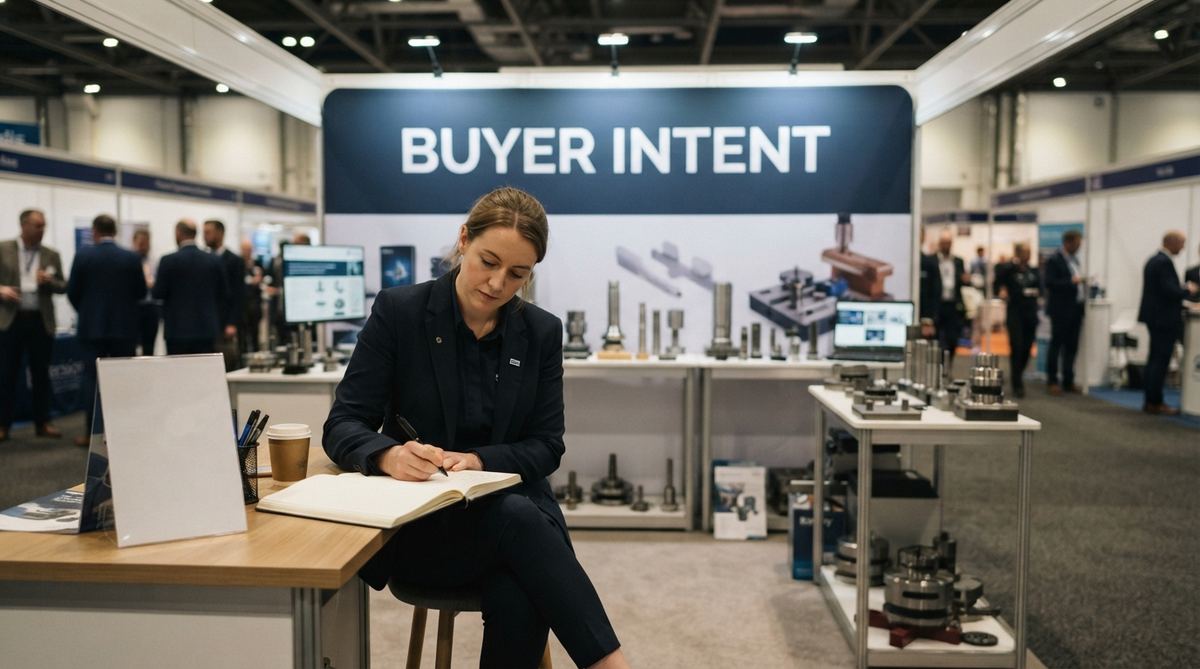
    Trade show buyer intent often masks the true procurement timeline, with many organisations attending simply out of habit rather than genuine readiness to purchase. By the time decision-makers arrive at exhibition stands, the critical intention-setting phase has already passed, leaving suppliers competing for engagement that’s already too late.

    Trade show buyer intent capture has become one of the most misunderstood parts of industrial marketing, and the numbers back this up: in research by event platform Certain, 94% of marketers said their company fails to convert event leads into opportunities. For UK manufacturers of tooling, machinery, and precision engineering equipment, this isn’t a minor inefficiency. It’s a structural problem with how procurement actually works.

    Key Takeaways

    • Procurement starts internally, months before a show. By the time a buyer walks the aisles, specs are often written and shortlists are already drawn up.
    • Badge scans record attendance, not readiness to buy. A scan tells you someone stood at your stand, not that they need what you sell.
    • 94% of marketers admit their company fails to convert event leads into opportunities. Presence and intent are two different things.
    • Most trade show leads never get followed up. Industry research puts the figure as high as 80% — volume of contacts is being prioritised over qualification and timing.
    • Intent-based demand capture works alongside shows, not instead of them. Our breakdown of intent data providers covers how manufacturers identify in-market accounts before the show floor opens.

    How Procurement Actually Starts Long Before Show Season

    Industrial procurement rarely begins at a stand. It begins with an internal trigger: a machine reaching end of life, a new production line, a compliance requirement, or a capacity constraint that engineering has flagged internally.

    From there, the buying committee moves into spec research. Someone drafts a technical requirement, checks tolerances, reviews compatibility with existing tooling, and starts building a shortlist of suppliers who can plausibly meet it.

    This stage can run for weeks or months before anyone books a stand pass. By the time the buyer arrives at a show, they usually already know which two or three vendors they’re seriously considering.

    Trade show buyer intent capture, done properly, has to account for this timeline. If your first touchpoint with a buyer is the moment they scan their badge at your stand, you’re not at the start of their journey. You’re somewhere in the middle, possibly near the end.

    Badge Scans Measure Presence, Not Trade Show Buyer Intent

    Trade Show Buyer Intent | Why Trade Shows Fail to Capture Intent Before Procurement Starts

    A badge scan tells you a person walked past, stopped, and let you record their details. It tells you almost nothing about where they are in the procurement cycle.

    According to the Center for Exhibition Industry Research (CEIR), 81% of trade show attendees have buying authority — which sounds encouraging until you realise this is exactly why conversion still fails. Decision-makers are present in large numbers, but presence alone doesn’t reveal whether they’re evaluating your product line, comparing you against an incumbent supplier, or simply gathering background information for a project that’s eighteen months out.

    In most industrial B2B contexts, the gap between a show conversation and a closed deal runs to months, not days. That gap only makes sense if you accept that the show itself rarely originates the buying decision. It sits inside a longer process that started before the exhibition and continues well after it.

    Real trade show buyer intent capture requires distinguishing between a browsing engineer collecting datasheets and a procurement lead actively comparing quotes. Most stands can’t tell the difference in real time, which is exactly the gap this article is addressing.

    The Cost Asymmetry: Exhibiting Versus Intent-Based Demand Capture

    CEIR’s 2026 Marketing Spend Decision Report found that B2B exhibitions capture 41% of exhibitors’ total marketing budgets — the single largest channel. That’s a significant commitment of spend for a channel that, by the industry’s own admission, converts poorly.

    The follow-up gap

    Industry research widely attributed to CEIR puts the share of trade show leads that never receive any follow-up as high as 80%.

    Compare that to the cost of monitoring in-market signals continuously throughout the year. Intent data platforms, content engagement tracking, and account-level research signals cost a fraction of a stand, travel, staffing, and show materials combined, yet they operate every week rather than for the three or four days a show runs.

    This is the cost asymmetry in plain terms: manufacturers spend heavily on a channel with a short window and poor tracking, while cheaper, always-on intent signals go under-resourced. Reviewing where your budget currently sits is something we cover directly in our marketing services, particularly for manufacturers weighing show spend against digital demand capture.

    Why UK Industrial Manufacturers Feel This Gap Most Acutely

    Tooling, machinery, and precision engineering purchases are technical, high-value, and infrequent. A single tooling upgrade or machinery investment might happen once every few years for a given buyer.

    That infrequency raises the stakes of every procurement cycle and pushes buyers to do more upfront research, not less. Technical specification documents, tolerance requirements, and compliance standards (ISO certifications, CE and UKCA marking, industry-specific approvals) are usually locked down before a single vendor conversation happens.

    UK manufacturers in the West Midlands and other industrial clusters often exhibit at the same regional and national shows every year, treating them as a fixed calendar event rather than reassessing whether the format still matches how their buyers actually research. Our work through fractional CMO support for West Midlands manufacturers frequently starts with exactly this question: is show spend matched to where buyers actually are in their journey?

    What Trade Show Buyer Intent Capture Should Actually Look Like

    Structured lead qualification conversation at an industrial trade show booth

    Capturing genuine intent means qualifying interest at the point of contact, not just after the show when the trail has gone cold.

    A workable qualification framework at the booth typically covers:

    • What triggered their visit to this specific stand (spec match, referral, existing supplier issue)?
    • Where they are in their internal buying process (early research, active shortlist, final approval stage)?
    • Who else is involved in the decision, and what their timeline looks like?
    • What specific technical requirement they’re trying to solve?

    Few exhibitors run a defined qualification process like this at the stand, and many still rely on manual capture — paper forms, handwritten notes, business cards in a bowl. Manual capture makes it almost impossible to score intent in real time or route hot leads to sales before the show even closes.

    Always-On Intent Monitoring: The Alternative to Waiting for Show Season

    If procurement starts with internal triggers and spec research, then the highest-value moment to reach a buyer is before they’ve shortlisted anyone, not after.

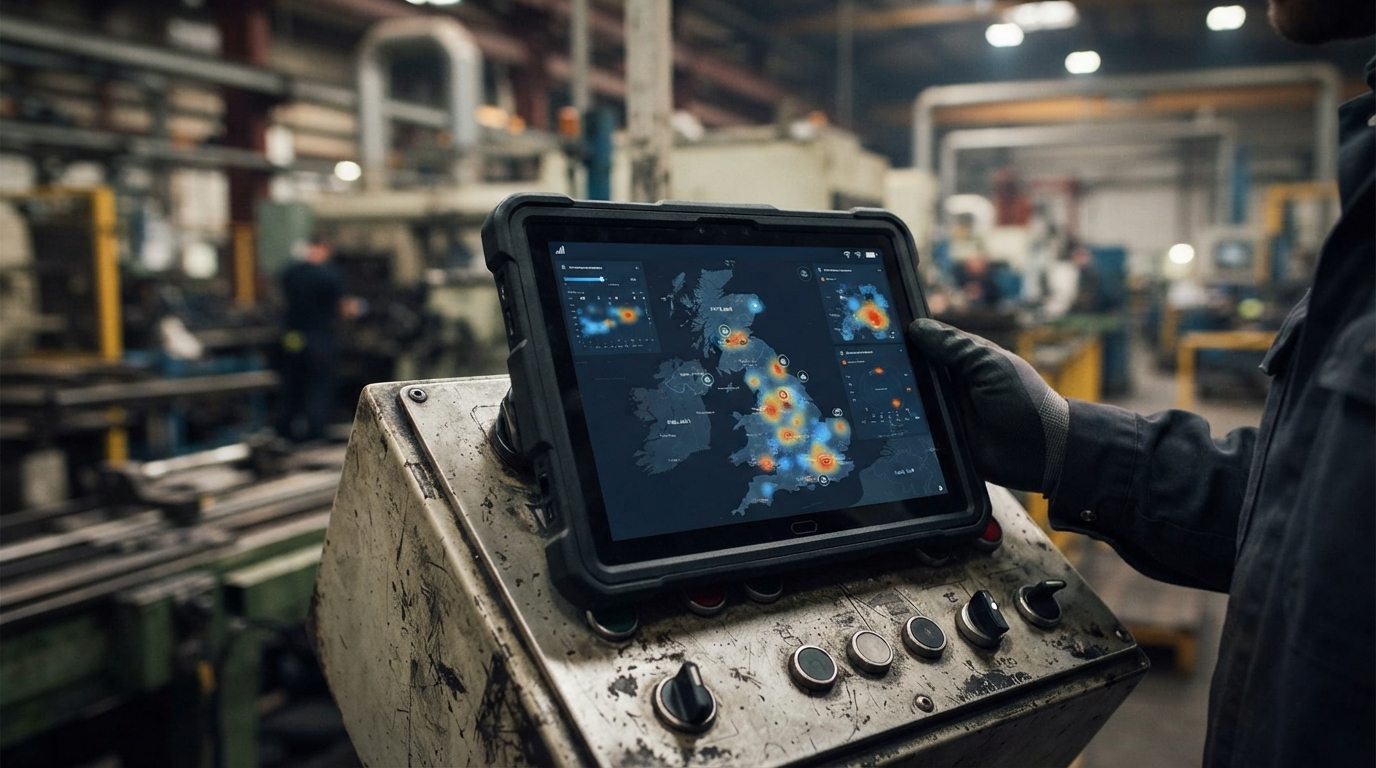
    Always-on intent monitoring tracks signals like technical content downloads, repeated visits to spec pages, competitor comparison searches, and account-level research activity throughout the year. This gives manufacturers visibility into which accounts are actively researching long before any show floor opens.

    We’ve put together a detailed comparison of platforms in this space in our guide to intent data providers, covering which tools suit industrial B2B sellers specifically rather than generic SaaS use cases.

    The goal isn’t to replace human judgement with software. It’s to know which accounts to prioritise before your sales team spends a day walking a show floor hoping to bump into the right people.

    Pre-Show Outreach: Turning In-Market Accounts Into Meetings Before the Doors Open

    Pre-show outreach planning for in-market industrial accounts ahead of an exhibition

    Once you know which accounts are actively researching, pre-show outreach becomes far more precise than a generic “come visit our stand” email blast.

    Booking a short meeting with an in-market account before the show, even a 15-minute call, means the stand conversation on the day starts from an existing relationship rather than a cold introduction. It also means your sales team isn’t relying on chance encounters to find the buyers who matter.

    This approach flips the usual failure point. Instead of hoping the right people find your stand, you’ve already identified them and secured time on their calendar before the show even begins.

    Treating Shows as Acceleration, Not Discovery

    The most useful mental shift for exhibitors is to stop treating shows as a discovery channel and start treating them as an acceleration point in a procurement cycle that’s already underway.

    Under this model, a show stand exists to move known, qualified accounts forward, confirm technical fit, resolve final objections, and get commercial terms discussed face to face. It’s not there to generate cold awareness from a standing start.

    This reframing changes how you measure success. Instead of counting badge scans, you count how many pre-identified in-market accounts you actually met, and how many of those conversations moved a deal closer to a decision.

    If you want a clear view of how your current show strategy compares against this model, requesting a pipeline diagnosis maps out where intent is being missed across your existing funnel, both online and at events.

    Conclusion

    Trade show buyer intent capture fails most often because it starts too late — at the stand — rather than earlier, when the buyer’s internal trigger and spec research first began. UK industrial manufacturers in tooling, machinery, and precision engineering are especially exposed to this timing gap because their purchases are infrequent, technical, and shortlisted well before any exhibition hall opens its doors.

    Fixing this doesn’t mean abandoning shows. It means pairing them with always-on intent monitoring, structured pre-show outreach, and a booth qualification process that actually distinguishes browsers from buyers.

    If you’d like to see where intent is currently leaking out of your funnel, request a pipeline diagnosis or get in touch to talk through your current show and demand generation strategy.

    Frequently Asked Questions

    What is trade show buyer intent capture?

    Trade show buyer intent capture refers to identifying and qualifying genuine purchase intent from attendees, rather than simply recording who visited a stand. It involves understanding where a buyer sits in their procurement journey, not just that they stopped to talk.

    Why do most trade show leads fail to convert?

    Most trade show leads fail to convert because exhibitors capture attendance data (badge scans) without qualifying actual buying intent or timeline. Industry research puts the share of leads that never receive follow-up as high as 80%, and few exhibitors run a defined qualification process at the booth.

    Is exhibiting at trade shows still worth it in 2026?

    Exhibiting is still worth it in 2026, but only when treated as an acceleration point for accounts already identified through pre-show research, not as a primary discovery channel. Combining show attendance with always-on intent monitoring gets far better results than relying on the stand alone.

    How can manufacturers identify buyer intent before a trade show?

    Manufacturers can monitor account-level research signals such as technical content downloads, spec page visits, and competitor comparisons throughout the year. This always-on intent monitoring reveals which accounts are actively researching well before show season, allowing for targeted pre-show outreach.

    What’s the difference between a badge scan and real buyer intent?

    A badge scan only confirms someone stood at your stand, while real buyer intent reflects where they actually sit in their procurement decision — whether they’re early in their research or ready to shortlist. CEIR research shows 81% of attendees have buying authority, but that alone doesn’t tell you if they’re ready to buy from you specifically.

    What should exhibitors do differently to improve lead qualification?

    Exhibitors should build a defined qualification process at the booth that asks about buying triggers, decision timeline, and technical requirements rather than just scanning badges. Scoring leads while they’re still at the stand lets sales prioritise in-market accounts before the show closes, instead of working through an undifferentiated list weeks later.

  • How to Compare Intent Data Providers for UK Industrial Sectors: A 2026 Comparison

    How to Compare Intent Data Providers for UK Industrial Sectors: A 2026 Comparison

    If you manufacture industrial tools or machinery in the UK, you need a working method for evaluating intent data providers for UK industrial sectors: a 2026 comparison that goes beyond vendor brochures. One enterprise platform in this space starts at $35,000 a year and still needs three to six months of dedicated RevOps resource before it produces a usable signal. That is the reality most manufacturers are not told before they sign.

    Intent Data Providers | How to Compare Intent Data Providers for UK Industrial Sectors: A 2026 Comparison

    Key Takeaways

    Question Direct Answer
    What is intent data, in industrial terms? Signals showing which accounts are researching specification, procurement, or supplier switching before they ever contact you.
    Do UK industrial manufacturers need a specialist provider? Yes. Generic B2B intent tools rarely map committee-level buying behaviour specific to engineering procurement cycles.
    Is enterprise software like 6sense worth it for SMEs? Usually not. The commercial cost and implementation timeline outweigh the pipeline gain for most sub-£20m manufacturers.
    Should we use one provider or several? Multi-source strategies improve signal coverage by 20% to 30% over single-vendor approaches.
    What matters more: the tool or the system around it? The system. A tool without a qualification engine behind it just generates noise, not pipeline.
    Where should we start before buying anything? Request a pipeline diagnosis before you commit budget to any intent platform.
    What is the real cost of getting this wrong? Payroll bloat, wasted retainers, and accounts lost to competitors who reached the specification stage first.

    Why UK Industrial Buyers Are Shortlisting You Before the First Enquiry

    Buying committees in industrial procurement do not start with a phone call. They start with research, specification checks, and AI-assisted shortlisting long before your sales team hears a name.

    This is what we call Share of Model: the degree to which your business shows up when a buyer’s research tools and AI models are compiling a shortlist. If you are absent from that information layer, you are absent from the decision, regardless of how good your engineering is.

    Intent data providers for UK industrial sectors exist to close that gap. They tell you who is researching, what they are researching, and when the window to act is still open.

    How to Compare Intent Data Providers for UK Industrial Sectors in 2026

    Comparison starts with a question most manufacturers never ask: where is the cycle stalling? Specification stage, commercial negotiation, or procurement approval, and what does that tell us about the qualification and messaging infrastructure we need to adjust?

    Use these criteria when comparing any provider:

    • Signal source depth: firmographic, technographic, and content-consumption data, or just one of these.
    • Committee mapping: does the platform track multiple stakeholders, or just a single contact?
    • Implementation timeline: how long before the system produces usable pipeline data.
    • Fully-loaded commercial cost: licence fee plus RevOps hours plus integration work.
    • Industrial relevance: does the provider understand long, multi-stakeholder engineering procurement cycles, or was it built for SaaS?

    The average B2B buying committee for deals over $50,000 now runs to 11.2 stakeholders. A provider that only tracks one contact is not comparing intent, it is guessing.

    Comparison criteria for evaluating intent data providers in industrial procurement

    Intent Data Providers for UK Industrial Sectors: A 2026 Comparison Table

    Below is a straightforward comparison across the three categories most UK manufacturers are choosing between this year.

    Category Typical Starting Cost Implementation Time Best Fit
    Enterprise intent platform (e.g. 6sense) From $35,000/year 3 to 6 months Large manufacturers with dedicated RevOps teams
    Multi-source intent aggregators Varies by vendor and volume Weeks, not months Mid-market firms needing broader signal coverage
    Fractional pipeline architecture retainer From £3,000/month Weeks, integrated with existing CRM UK industrial manufacturers without in-house marketing infrastructure

    Notice the pattern. Cost and complexity climb fast once you move into enterprise territory, and the return only justifies itself at scale.

    Did You Know?
    Multi-source intent strategies improve signal coverage by 20% to 30% compared to relying on a single provider.
    Source: Databar.ai

    6sense and the Enterprise Tier: Is It Right for UK Manufacturers?

    6sense is the name most people mean when they say “intent data platform.” It is powerful, and it is not built for most UK industrial firms.

    Starting price sits around $35,000 a year. Implementation runs three to six months and requires a RevOps function most sub-£20m manufacturers do not have.

    If you are a large machinery group with an existing data team, this may be the right tool. If you are a mid-sized manufacturer trying to shorten a six to eighteen month sales cycle without adding headcount, the fully-loaded commercial cost of this platform will outweigh the pipeline it produces in year one.

    Buying enterprise software before you have a qualification engine to act on the signal is buying a dashboard, not a pipeline.

    Multi-Source Intent Data Providers for UK Industrial Sectors: Why One Vendor Is Never Enough

    No single provider sees the whole buyer journey. One tracks content consumption. Another tracks technographic footprint. A third tracks review-site research behaviour.

    Stack them, and coverage improves by 20% to 30% over any single source. Industrial buying committees average 11.2 stakeholders on larger deals, and no one vendor tracks all of them consistently.

    This is why we do not recommend picking “a provider.” We recommend architecting a stack, then wiring it into your CRM so intent becomes a qualification trigger, not a report nobody reads.

    Multi-source intent data stack feeding CRM qualification triggers

    Turning Intent Signals Into Pipeline Architecture, Not Dashboards

    Data without infrastructure is noise. This is the single biggest failure point we see across UK industrial manufacturers evaluating intent data providers for UK industrial sectors in 2026.

    A signal that an account is researching your product category is worthless if there is no qualification sequence, no lead scoring, and no CRM integration to act on it within hours, not weeks.

    Our own approach is built on three pillars:

    1. Market Intelligence Infrastructure: competitive position mapping and addressable market sizing so you know which high-margin product categories to prioritise.
    2. Pipeline Architecture & Qualification Engine: automated intent-signal tracking with CRM lead scoring filtered by budget and authority.
    3. Commercial Reporting & Attribution: closed-loop attribution from first digital touch to CRM, reported as Pipeline Velocity and Cost Per Acquisition, not impressions.

    Pipeline architecture, not marketing services. That distinction is the entire point.

    What to Ask Before You Buy: The Pipeline Diagnosis Checklist

    Before signing any contract with an intent data provider, ask yourself the questions that actually matter.

    • What is the fully-loaded commercial cost of winning a new account in your highest-margin product categories?
    • Where does your current cycle stall: specification stage, commercial negotiation, or procurement approval?
    • Does your CRM already have the messaging infrastructure to act on a signal within 24 hours?
    • Are you buying a tool, or buying a system that builds your technical authority into the information layer where buying decisions actually originate?

    If you cannot answer these with numbers, not opinions, you are not ready to buy intent software yet. This is exactly why we tell manufacturers to request a pipeline diagnosis before signing anything.

    Did You Know?
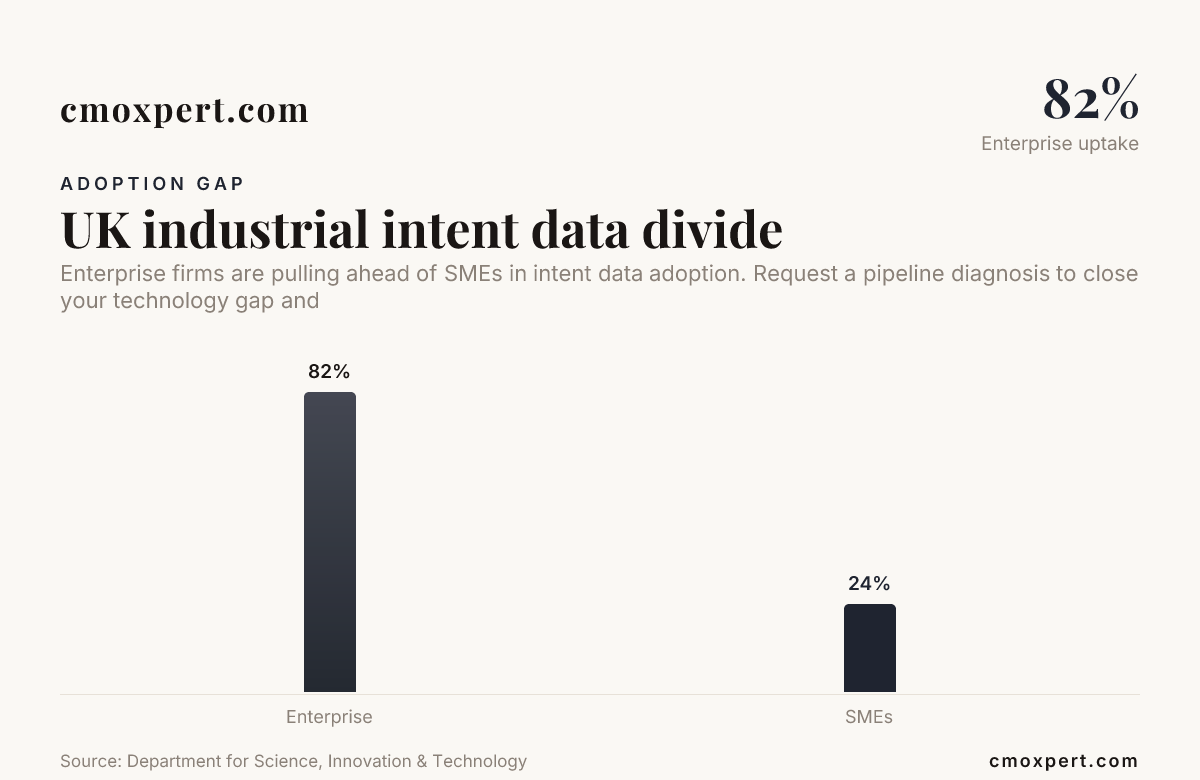
    82% of large UK businesses that have digitised their data now report using AI for at least one business purpose.

    UK industrial intent data divide — data from Department for Science, Innovation & Technology

    Enterprise firms are pulling ahead of SMEs in intent data adoption. Request a pipeline diagnosis to close your technology gap and stay competitive.

    Pipeline architecture reporting on velocity and cost per acquisition

    The Fully-Loaded Commercial Cost of Getting This Wrong

    The manufacturing sector’s median marketing budget sits at 5.7% of revenue in 2026, a clear pivot toward account-based programmes and AI tooling. Spending that budget on the wrong intent stack does not just waste money, it hands the account to a competitor who reached the specification stage first.

    ABM-led programmes generate 2.6x more pipeline per marketing dollar than broad-reach demand generation, with win rates up 41% over traditional methods. Those numbers only hold if the underlying data feeding the ABM programme is accurate and mapped to the right committee members.

    No vanity metrics. No impressions. No reach reports. If your provider cannot show Pipeline Velocity and Cost Per Acquisition, not Cost Per Click, you are paying for noise.

    We are not the right firm for every manufacturer. We are the right firm for the ones who are serious about winning, and serious enough to request a pipeline diagnosis before spending another pound on unverified intent software.

    Conclusion

    Comparing intent data providers for UK industrial sectors in 2026 is not about picking the platform with the most impressive logo wall. It is about matching signal depth, committee mapping, and implementation cost to the reality of your sales cycle.

    Enterprise platforms like 6sense work for firms with the resource to run them. Multi-source stacks close coverage gaps for everyone else. Neither works without pipeline architecture behind it.

    If this does not describe your business, we are not the right firm for you. If it does, request a pipeline diagnosis before you spend another quarter guessing at intent.

    Frequently Asked Questions

    What are intent data providers for UK industrial sectors, and how do they work in 2026?

    They are platforms and data stacks that track digital research behaviour, such as content consumption and technographic signals, to show which accounts are actively researching your product category. In 2026, the strongest providers combine multiple sources rather than relying on one.

    Is 6sense worth it for a UK industrial manufacturer?

    Only if you have the RevOps resource to manage a three to six month implementation and can justify a starting cost around $35,000 a year. For most mid-sized manufacturers, a fractional pipeline architecture retainer delivers better fully-loaded commercial cost outcomes.

    How much does intent data software cost for industrial companies?

    Enterprise platforms start from roughly $35,000 annually, while multi-source aggregators and fractional retainers can start from around £3,000 a month depending on scope. The right comparison always factors in implementation time and internal resource, not just the licence fee.

    Do I need more than one intent data provider?

    Yes, in most cases. Multi-source strategies improve signal coverage by 20% to 30% compared to single-provider setups, which matters when buying committees average 11.2 stakeholders on larger deals.

    What is the difference between intent data and traditional lead generation?

    Traditional lead generation waits for a form fill or a trade show conversation. Intent data identifies research activity before that contact happens, giving you visibility at the moment of intent rather than the moment of enquiry.

    How long does it take to see results from an intent data platform?

    Enterprise platforms typically need three to six months before producing usable signal. Fractional pipeline architecture retainers integrated with your existing CRM can start generating qualified pipeline data within weeks.

    Should industrial manufacturers request a pipeline diagnosis before buying intent software?

    Yes. A genuine pipeline diagnosis identifies where your sales cycle actually stalls, specification stage, commercial negotiation, or procurement approval, before you spend budget on a platform that may not address the real bottleneck.