Tag: Contractor Mortgages

  • Why Experience Matters More Than Contract Length for Mortgages

    Why Experience Matters More Than Contract Length for Mortgages

    When securing a UK mortgage, lenders increasingly recognise that experience contract length mortgages matter far less than borrower track record. Your proven financial history and stability significantly outweigh the duration of previous agreements in determining approval rates and competitive rates.

    Understanding why experience matters more than contract length for mortgages is one of the most important pieces of knowledge any contractor, freelancer, or self-employed professional in the UK can have. If you have been turned away by a high street lender because your current contract only has three months remaining, or because you work on a rolling basis, the good news is that specialist lenders often take a very different view — and your career history may carry considerably more weight than the date on your latest contract.

    Blog illustration

    Key Takeaways

    • Contract length is rarely the deciding factor for specialist lenders. Your broader industry experience, earnings history, and professional track record are often considered more relevant when assessing a contractor mortgage UK application.
    • Self-employed mortgage applicants are frequently assessed on net profit, salary and dividend combinations, or day rate rather than a fixed-term employment contract.
    • Day rate contractor mortgage calculations typically use an annualised figure based on your daily rate, often using a 46-week or 48-week multiplier, which may produce a higher qualifying income than salary-based assessments.
    • Ltd company director mortgage applicants may be able to include retained profits and dividends as part of their assessed income, depending on the lender’s criteria.
    • CIS contractor mortgage and umbrella company workers are increasingly recognised by specialist lenders who understand the construction and contracting sectors.
    • Mortgage with irregular income is achievable — lenders may consider an average of your earnings over one to three years rather than requiring a single consistent figure.
    • Working with a broker who specialises in complex income mortgage UK cases can significantly improve your chances of finding a suitable lender and product.

    Why Experience Matters More Than Contract Length for Mortgages: The Lender’s Perspective

    Most high street banks use automated credit scoring systems that are designed around employees with permanent contracts and PAYE income. When your income does not fit neatly into that model, those systems may flag your application as higher risk — not because you are a poor credit risk, but because the data points they rely on simply do not apply to you.

    Specialist lenders, however, take a more considered approach. They may look at the full picture: how long you have been working in your field, whether you have a consistent pattern of earnings, and whether your professional skills are in demand. A contractor who has been placing successive short-term contracts in the same industry for seven years may be considered a more stable lending prospect than a newly employed permanent member of staff.

    This is precisely why experience matters more than contract length for mortgages. Lenders who understand the contracting market recognise that the absence of a long fixed-term contract does not equal financial instability. It simply means your working arrangements are structured differently.

    Blog illustration

    How Specialist Lenders Assess Complex Income Mortgage UK Applications

    When a lender reviews a complex income mortgage UK case, they are generally trying to answer one core question: can this applicant sustain mortgage repayments over time? For contractors and freelancers, the evidence used to answer that question looks different from a standard PAYE payslip.

    Lenders may consider some or all of the following when assessing a non-standard income mortgage application:

    • The number of years you have been working in your profession or industry
    • Whether your previous contracts were renewed in a similar field or with similar clients
    • Your average earnings over the past one to three years
    • The strength and consistency of your day rate or project fees
    • Your accountant’s projections and business accounts, if applicable
    • Whether gaps between contracts were short, voluntary, or explained

    Understanding how lenders use industry experience as a mortgage criteria can help you frame your application in a way that resonates with the right underwriters.

    Why Experience Matters More Than Contract Length for Mortgages — 3 key reasons mortgage experience matters.

    Three key reasons why mortgage experience matters more than contract length are highlighted here. Use these insights to compare lenders and choose the best loan options.

    Contractor Mortgage UK: Why Your Track Record Speaks Louder Than a Long Contract

    If you are applying for a contractor mortgage UK, one of the most common concerns is what happens when your current contract is due to expire within the next few months. Many applicants assume this automatically disqualifies them. In practice, some lenders may be willing to lend provided you can demonstrate a sustained history of contracting in the same field and a reasonable expectation of continued work.

    IT contractors are a particularly well-understood group within the specialist lending market. Skills in areas such as software development, cybersecurity, and data engineering tend to remain in high demand, and lenders may factor this into how they assess employment continuity. If you are an IT professional, resources like the guide on mortgages for IT contractors on rolling contracts and information on complex IT contractor pay structures may be particularly relevant to your situation.

    For those who work through a limited company in the technology sector, the guide on freelance IT consultant mortgages explores how lenders may interpret your income structure in more detail.

    Self-Employed Mortgage: What Changes When You Move Away From PAYE

    Applying for a self-employed mortgage introduces a different set of documentation requirements and assessment methods. Rather than payslips and a P60, lenders will typically request SA302 tax calculations, full accounts, and sometimes bank statements covering several months of trading activity.

    One of the more frustrating aspects of the self-employed mortgage process is that many standard lenders require a minimum of two or three years of accounts. However, some specialist lenders may consider applications with just one year of trading history, provided the applicant can demonstrate relevant prior experience in the same field. There is dedicated guidance available on mortgages with only one year of accounts and how to present your case effectively.

    It is also worth understanding why banks commonly reject self-employed mortgage applicants, so you can address those potential objections before submitting your application.

    Blog illustration

    Day Rate Contractor Mortgage: How Your Daily Rate Can Work in Your Favour

    For many contractors, the day rate contractor mortgage calculation method is more favourable than a traditional income assessment. Rather than using your salary or profit figures, some lenders will take your day rate, multiply it by five (working days per week), and then annualise that figure using a 46-week or 48-week working year.

    For example, a contractor earning £500 per day could have their income assessed at approximately £115,000 to £120,000 per annum under this method, depending on the lender. This may produce a substantially higher borrowing potential than if the same individual’s income were assessed purely through a limited company salary and dividend combination.

    You can explore this further through the guide on how to calculate your mortgage using your day rate and the explanation of the contractor 46-week multiplier method used by specialist lenders.

    This approach is one of the clearest examples of why experience matters more than contract length for mortgages. A lender using the day rate method is effectively valuing your current earning power and professional standing, not the number of months left on your paperwork.

    Ltd Company Director Mortgage: Making the Most of Your Business Structure

    If you operate as a limited company director, your income is likely split between a salary and dividends, and may also include retained profits sitting within the business. A standard mortgage lender may only consider your salary, which can make your borrowing potential appear far lower than your actual earnings would suggest.

    Specialist lenders who deal with Ltd company director mortgage applications regularly may be willing to assess income on a salary-plus-dividends basis, or in some cases to consider retained profits as part of the affordability calculation. The guides on the best lenders for directors using dividends and using retained profits in a mortgage application provide useful detail on how this works in practice.

    Additional options for directors include net profit plus salary mortgage assessments, which some lenders use to arrive at a more accurate picture of your total earnings. If you are unsure which approach suits your circumstances, the advice on choosing a specialist broker for director mortgages explains what to look for in a mortgage adviser with genuine experience in this area.

    Blog illustration

    CIS Contractor Mortgage and Umbrella Company Mortgages

    Workers in the construction industry operating under the Construction Industry Scheme (CIS) face their own set of mortgage challenges. A CIS contractor mortgage application often involves gross income that looks significantly different once CIS tax deductions are applied, which can confuse standard lenders who are not familiar with the scheme.

    Some specialist lenders have developed criteria that specifically accommodate CIS workers, assessing gross earnings rather than net receipts. This can make a meaningful difference to the loan amounts available to CIS contractor mortgage applicants.

    Similarly, workers who operate through an umbrella company may find that their employment status is misinterpreted by lenders unfamiliar with this arrangement. The guide on umbrella company contractor mortgages explains how lenders may treat umbrella payslips and what documentation is likely to be required.

    Freelancer Mortgage and Multiple Income Sources: Building a Coherent Application

    A freelancer mortgage application can become complicated when income comes from several different clients, platforms, or project types. Lenders may struggle to assess affordability when there is no single employer, no consistent monthly figure, and income that varies from one month to the next.

    However, this is another situation where experience and history work in your favour. If you can demonstrate a consistent level of overall income across multiple sources over a sustained period, some lenders may be willing to average that income and use it as the basis for an affordability assessment.

    A multiple income sources mortgage application benefits greatly from clear, well-organised documentation. Working with an accountant who understands the lending process and can present your figures compellingly is often very helpful. The guide on using accountant projections in a mortgage application explains how forward-looking figures can sometimes be used alongside historical accounts.

    It is also worth knowing how lenders approach proving affordability using business bank statements, which can supplement or even substitute for formal accounts in some cases.

    Blog illustration

    Non-Standard Income Mortgage: What Lenders Really Look For in 2026

    In 2026, the market for non-standard income mortgage products has matured considerably. A growing number of lenders now offer specific criteria for contractors, directors, and freelancers, recognising that flexible working arrangements are a permanent feature of the UK economy rather than an edge case.

    According to data from HMRC and the Office for National Statistics, millions of UK workers operate outside traditional employment, including sole traders, limited company directors, and those in the gig economy. Lenders who fail to serve this segment effectively are excluding a substantial portion of the working population.

    For those who are new to running a business, there is specific guidance available on the best lenders for new businesses and how to approach a mortgage application in your first year of trading. If your contract work is affected by IR35 rules, it is worth reviewing how IR35 status can affect your mortgage application before approaching lenders.

    Mortgage with Irregular Income: Practical Steps to Strengthen Your Application

    A mortgage with irregular income requires a more thoughtful approach to documentation and lender selection than a standard application. The following steps may help you present your case more effectively:

    1. Compile a clear earnings history. Two to three years of tax returns, accounts, or bank statements showing consistent overall income is more persuasive than a single strong year.
    2. Explain gaps proactively. If there were periods of lower income or between contracts, having a brief written explanation can prevent underwriters from drawing incorrect conclusions.
    3. Work with a specialist broker. A broker who regularly handles complex income mortgage UK cases will know which lenders are likely to consider your application favourably, saving time and reducing the risk of unnecessary credit searches.
    4. Consider your deposit size. A larger deposit may give lenders more comfort and could open up a wider range of products.
    5. Get your accounts in order early. Lenders typically want accounts certified by a qualified accountant. Late or incomplete accounts can delay or derail an application.

    For professional contractors seeking a broader overview of the market, the guide on top mortgage options for professional contractors and the resource on lenders who accept short-term contracts are worth reviewing.

    Why Experience Matters More Than Contract Length for Mortgages: The Case for Specialist Advice

    The question of why experience matters more than contract length for mortgages ultimately comes down to how lenders define risk. A permanent employee can lose their job with a month’s notice. A skilled contractor with ten years of consistent work in a specialist field, a full order book, and a strong professional reputation may represent a considerably more stable income stream, even if their next contract is only twelve weeks long.

    The challenge is finding lenders who understand this distinction, and brokers who can articulate it effectively on your behalf. This is not a process that suits a direct application to a high street bank. It requires a specialist who works with underwriters who have the authority and training to assess cases on their individual merits.

    Whether you are a day rate contractor mortgage applicant trying to maximise your borrowing, a freelancer mortgage seeker with income from several clients, or a Ltd company director mortgage applicant whose accounts look complex on the surface, the right lender and adviser combination can make a significant difference to your outcome.

    “Your home may be repossessed if you do not keep up repayments on your mortgage. The information in this article is for general educational purposes and does not constitute regulated financial advice. Always seek guidance from a qualified, FCA-authorised mortgage adviser before making any financial decision.”

    Blog illustration

    Conclusion

    The central lesson of why experience matters more than contract length for mortgages is this: the right lender looks at the whole person, not just the paperwork in front of them. Your years in your industry, your pattern of earnings, your professional reputation, and your financial conduct all tell a more complete story than the end date of your most recent contract.

    If you work with a contractor mortgage UK specialist, present your documentation clearly, and choose lenders with criteria designed for non-standard income mortgage cases, you may find that your options are considerably wider than a high street rejection might suggest. A self-employed mortgage, a multiple income sources mortgage, or a mortgage with irregular income are all achievable outcomes for the right applicant with the right support.

    We work with contractors, freelancers, sole traders, and limited company directors across the UK to find mortgage solutions that reflect the reality of modern working life. If your income structure does not fit the standard mould, speaking to a specialist is the most practical first step.


    Frequently Asked Questions

    Does contract length matter for a mortgage if I have been contracting for many years?

    For specialist lenders, a long and consistent contracting history may carry more weight than the remaining term on your current contract. Some lenders specifically assess contractor mortgage UK applications using industry experience and day rate rather than contract duration, so a short remaining term does not automatically disqualify you.

    Can I get a self-employed mortgage with only one year of accounts?

    Some specialist lenders may consider a self-employed mortgage application with just one year of trading accounts, particularly if you can demonstrate relevant prior experience in the same field. The mortgage with one year of accounts guide covers which lenders may be more flexible in this area.

    How is income calculated for a day rate contractor mortgage?

    For a day rate contractor mortgage, many specialist lenders multiply your daily rate by five (working days), then by 46 or 48 weeks to arrive at an annualised income figure. This method often produces a higher qualifying income than a salary or net profit assessment and reflects your actual earning capacity more accurately.

    Can a Ltd company director include retained profits in a mortgage application?

    Some lenders may consider retained profits sitting within a limited company as part of a Ltd company director mortgage affordability assessment, particularly where those profits form a consistent part of the business’s financial position. Not all lenders accept this approach, so specialist advice is important.

    Why do banks reject self-employed mortgage applications even when the income looks strong?

    High street banks often use automated systems designed around PAYE income, which may flag non-standard income mortgage applications as higher risk regardless of actual financial strength. Common reasons include income variability, complex company structures, or the way profit is drawn. A specialist lender familiar with complex income mortgage UK cases is more likely to assess the full picture.

    Does IR35 status affect my ability to get a contractor mortgage in 2026?

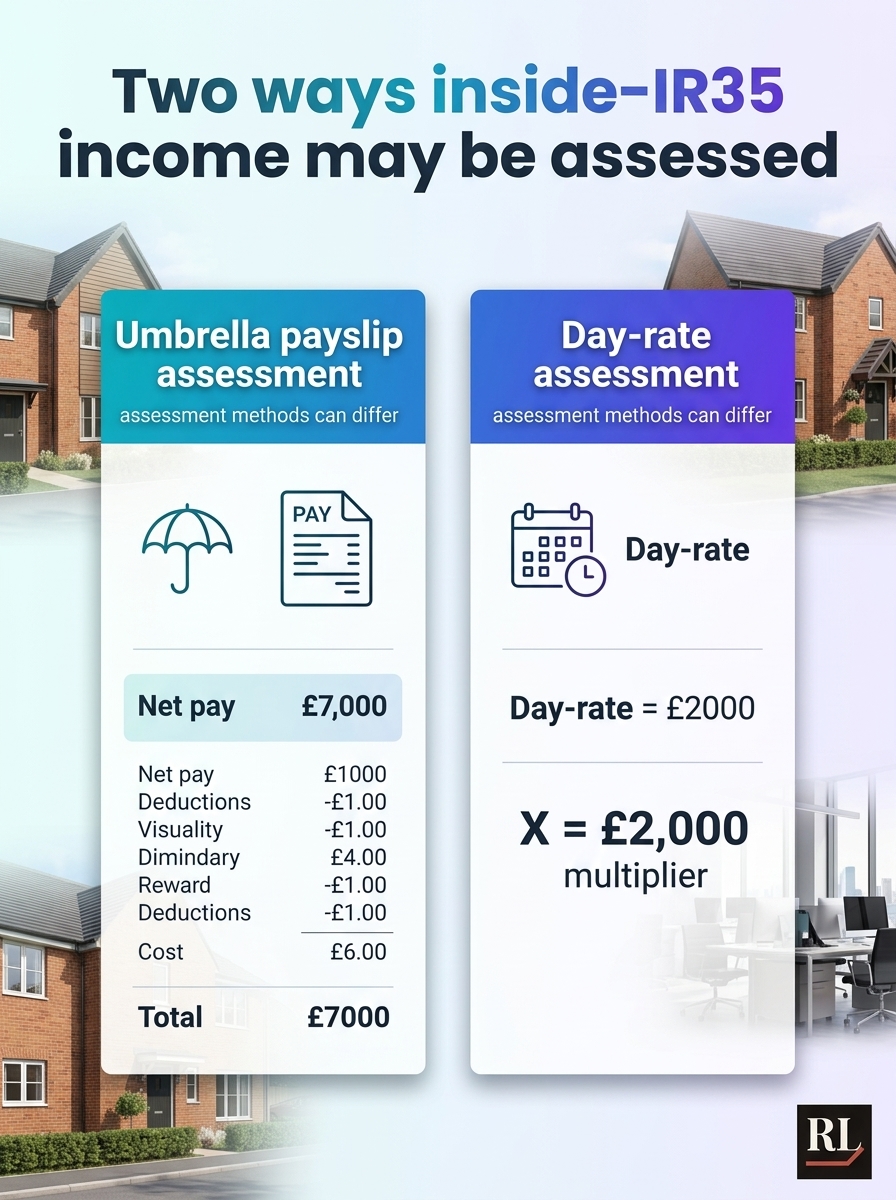
    IR35 status can affect how lenders classify your employment and therefore how they assess your income. Inside-IR35 contractors may be treated more like employees by some lenders, while outside-IR35 contractors may have access to day rate calculations. The guide on IR35 status and its mortgage impact explains the distinctions in more detail.

    Is a freelancer mortgage harder to get than a contractor mortgage?

    A freelancer mortgage can be more complex than a contractor mortgage if income comes from many different sources and fluctuates significantly, as lenders may find it harder to establish a consistent earning figure. However, with a clear earnings history across one to three years and the right specialist broker, a mortgage with irregular income remains a realistic option for many freelance professionals.

  • Expat Mortgages UK How to Buy Property While Living Abroad (2026 Guide for UK Residents)

    Expat Mortgages UK How to Buy Property While Living Abroad (2026 Guide for UK Residents)

    Buying property in the UK while living abroad presents unique challenges, but expat mortgages while living overseas have become increasingly accessible. This comprehensive guide explains how UK residents abroad can navigate the mortgage process and secure financing for their next property purchase.

    Expat mortgage applicants often face a different set of hurdles to lenders, and research suggests the average annual income for British expatriates applying for UK mortgages is £101,141, significantly higher than the UK domestic average. In Expat Mortgages UK How to Buy Property While Living Abroad, understanding how affordability checks, income evidence, and UK credit links work (especially for contractors, freelancers, and complex income) can make the process feel far more manageable.

    Blog illustration

    Key Takeaways

    What to focus on Why it matters
    Income evidence for a complex income mortgage UK Lenders may look at consistency, not just recent payslips or bank balances.
    Mortgage readiness before you house-hunt It helps you understand what lenders may consider for your situation, including affordability and deposits.
    Expats and overseas income Some lenders require extra checks when income is received outside the UK.
    UK credit history and addresses Where possible, maintaining UK credit links can reduce concerns for some applications.
    Paperwork for self-employed mortgage and contractors Lenders may consider accounts, tax evidence, and trading history, which can be more involved while abroad.
    Specialist support for non-standard income mortgage It is possible you may need manual underwriting rather than a simple automated route.

    Why buying a home from abroad can feel harder (and what lenders may consider in 2026)

    When you are living outside the UK, you still need a mortgage that meets lender affordability rules, but the evidence trail can change. In Expat Mortgages UK How to Buy Property While Living Abroad, we regularly see that lenders may want extra confirmation of income source, stability, and how you will manage repayments from abroad.

    Lenders may consider the type of income you earn and how it is evidenced. For example, a contractor mortgage UK application often needs consistent contractor history, while a freelancer mortgage application may rely on trading accounts and tax records. For higher complexity, a complex income mortgage UK case can require a more detailed review than standard “one size fits all” underwriting.

    We also find that “where you are resident” can affect how quickly you can supply documents and how lenders verify them. That does not mean expats are excluded, but it does mean planning matters. It is possible that some lenders may also look for signals of UK ties, such as a stable UK address history, UK bank activity, or other documented links, depending on the mortgage type.

    General information only: the criteria vary between lenders and depend on your circumstances. We cannot say what any lender will accept in advance.

    Getting mortgage-ready as an expat: income, deposits, and proof of affordability

    The most practical starting point in Expat Mortgages UK How to Buy Property While Living Abroad is to build a “lender-ready” file. Lenders may consider your affordability based on verified income and expenditure, and they may also look at your deposit and how it was sourced.

    For many UK buyers abroad, the deposit is not the only issue. The bigger challenge can be income evidence. A self-employed mortgage or contractor mortgage UK often needs careful document preparation, particularly if you are earning from multiple or irregular income streams, such as day work plus occasional contracts.

    It is possible that lenders may ask for things like:

    • Proof of income (for example, invoices, statements, payslips where relevant).
    • Account-based evidence, such as management accounts or tax records, for a non-standard income mortgage.
    • Bank statements that show income regularly received and how you manage payments.
    • Details of how you will repay the mortgage while abroad.

    If you are a contractor, a day rate contractor mortgage case may be assessed with reference to trading history and the reliability of income. If you are a CIS contractor mortgage applicant, lenders may also want clarity around how CIS deductions are reflected and evidenced.

    Important: Your home may be repossessed if you do not keep up repayments on your mortgage.

    Did You Know?
    As of early 2026, roughly 51.1% of expat mortgage applications are for residential use, while 48.9% are for buy-to-let (BTL) investments.

    Blog illustration

    Complex income and overseas life: contractors, freelancers, and multiple income sources

    In Expat Mortgages UK How to Buy Property While Living Abroad, many applicants are not “simple employed income” cases. We work with people who have multiple income sources mortgage situations, including mixed PAYE and self-employment, or switching between short-term contracts while living abroad.

    If you are a freelancer mortgage applicant, lenders may consider consistency over time. That means we often recommend presenting income evidence in a way that helps a lender understand trading patterns, not just snapshots.

    If you are a contractor, a contractor mortgage UK application can be supported with clear evidence of contract continuity. Some lenders may look at how your day rates translate into sustainable affordability, especially if your workload changes month to month.

    We commonly signpost specialist pages that match these profiles, including:

    Non-standard income and expat underwriting: how self-employed and company directors may be assessed

    If your income includes retained profits or dividends, your application can require a more detailed approach. In Expat Mortgages UK How to Buy Property While Living Abroad, directors and business owners may find that some lenders treat these cases as more complex, particularly when you are not physically present in the UK.

    For a Ltd company director mortgage, lenders may consider how you pay yourself and whether there is sufficient evidence to assess your income. If you are also drawing from retained profits, this can add complexity, and it is possible that lenders may ask for more detailed accounts evidence.

    If you are self-employed, a self-employed mortgage may require a structured set of documents. Some lenders may look at longer trading history, while others may consider alternative evidence depending on the case.

    Where it helps, we direct clients to specialist resources that align with these situations, including:

    For directors who only have limited UK credit activity while living abroad, it is possible that extra verification steps could be requested. Preparing the file early can reduce delays.

    Foreign income, foreign nationals, and building a UK credit picture from abroad

    Some expats have limited UK credit history, or their UK credit file may not reflect their current income. A recurring concern in Expat Mortgages UK How to Buy Property While Living Abroad is whether lenders may treat overseas circumstances differently and whether there is enough UK-based information to assess affordability.

    Research in 2026 has suggested that around 22% of overseas mortgage applicants cite a lack of UK credit history as a primary concern for rejection. While this does not mean every application fails, it highlights the importance of planning and evidence preparation when you live abroad.

    Depending on the lender and the mortgage type, it is possible you may be asked to demonstrate:

    • How your income is received and evidenced while overseas.
    • Links to the UK, such as documented address history.
    • Consistency of payments and ability to maintain repayment arrangements.

    If you have foreign income, or your situation includes residency outside the UK, we often review options via our guidance on:

    Note: We cannot guarantee outcomes. Lenders may consider your application differently based on how your income is evidenced and the details of your circumstances.

    Did You Know?
    The number of UK properties owned by individuals with an overseas correspondence address has reached approximately 202,568 across England and Wales.
    Source: Property118

    Planning the application timeline from outside the UK, including legal and survey steps

    Even with a strong income profile, expat purchases can be delayed if paperwork needs signatures and documents do not reach the right parties quickly. When you plan Expat Mortgages UK How to Buy Property While Living Abroad, we suggest treating the timeline as a project with clear owners.

    Typical stages include:

    1. Mortgage assessment, where lenders may consider affordability and evidence.
    2. Application submission, including income, identity, and deposit checks.
    3. Survey and valuation, which may require access arrangements.
    4. Legal conveyancing, including contract review and exchange.
    5. Completion, where you make sure funds and instructions are in place.

    Some lenders may also have their own turnaround times for document verification. If you are juggling UK house-viewing trips with overseas travel, it can help to line up a UK solicitor early and agree how you will provide signatures remotely where permitted.

    If you are exploring different product types, you may also want to consider how repayment strategies affect affordability. For instance, interest-only arrangements can change how lenders assess the overall risk, so you may want specialist guidance via interest-only mortgage options.

    Example: budgeting for an expat purchase with complex income

    Imagine a UK-based contractor living abroad with mixed earnings and occasional gaps between contracts. In 2026, it is common for lenders to focus on verified income patterns rather than optimistic projections, so we would typically encourage an evidence-based view before you proceed to the valuation stage.

    We would also help you plan for additional costs, such as survey fees, solicitor fees, and any needed documentation translations or confirmations, depending on your circumstances.

    Blog illustration

    Expats choosing the right mortgage route: residential, buy-to-let, and specialist case types

    Not all expat borrowing is the same. Some people buy to live in the UK again later, while others purchase as a long-term investment. In Expat Mortgages UK How to Buy Property While Living Abroad, lenders may treat residential and investment lending differently, and not every lender offers the full range of options.

    If your income is split between two people, or you have mixed income profiles within the household, your case can become a dual-income households scenario. It is possible lenders may still consider it positively, but they may want evidence that aligns with each applicant’s income type.

    For multi-person, multi-income situations, we often review scenarios like dual-income households alongside guidance on complex underwriting.

    If you have a wider range of issues, such as non-standard income, overseas residence, or other complexities, you may want a route that supports manual review. Our materials on complex cases and complex income mortgage solutions are designed to help you understand what “complex” often means in practice.

    We also use structured checks to avoid misunderstandings early in the process. For example, you can review the mortgage logic check approach when you want to stress-test your situation before submitting an application.

    Using lender comparisons and eligibility checks without over-applying

    When you are living abroad, delays can be frustrating, but repeated applications can still cause problems. In Expat Mortgages UK How to Buy Property While Living Abroad, we aim to improve the quality of your submission rather than encourage unnecessary reapplications.

    To support this, we often start with a clearer assessment of fit. Our lender comparison matrix can help you understand the landscape lenders use for different income types and case complexities.

    For those with a shorter evidence runway, or specific account circumstances, you may also want to review specialist guidance on one-year accounts mortgages. Some lenders may consider evidence on a different basis depending on how your business has traded, but it is still important to provide verified documentation.

    For any case involving overseas residence, foreign income, or foreign nationality considerations, it is also possible you may need guidance aligned to your exact situation. That is why we review options through our expat-focused landing pages such as UK mortgages for expats and foreign nationals and mortgages with foreign income.

    If you are building or renovating while living abroad

    Some expats do not buy an existing property, they buy land or renovate a property to make it habitable. If your plan includes self-build or significant renovation, mortgage criteria can differ from standard purchases.

    It is possible that a self-build or renovation route may require additional information on build stages, contractors, and how the project is funded. If this is your plan in 2026, review self-build and renovation mortgages and make sure your evidence pack is aligned early.

    If your income profile also sits in a complex bracket, it can become a combined case of non-standard income mortgage plus project finance style underwriting, so careful preparation becomes even more important.

    Blog illustration

    Important FCA-aware reminders (not regulated advice)

    This article is general information for UK readers and does not constitute regulated financial advice. Mortgage lending decisions depend on your circumstances and the lender’s criteria at the time of application.

    Your home may be repossessed if you do not keep up repayments on your mortgage.

    For official guidance about affordability and consumer protections, you can also refer to the Financial Conduct Authority (FCA) and for tax and income-related support, you can refer to HM Revenue and Customs (HMRC).

    Quick note on statistics and market context in 2026

    Mortgage rates and lender policies can change. Even if numbers in 2026 look reassuring, lenders may still focus on your verified affordability and evidence. We cannot predict the outcome of your application.

    Expat Mortgages UK How to Buy Property While Living Abroad: 5-step process infographic.

    Five-step visual guide to buying UK property as an expat. From mortgage readiness to completion, this infographic summarizes the essential steps.

    Conclusion: Expat Mortgages UK How to Buy Property While Living Abroad with clarity

    Expat Mortgages UK How to Buy Property While Living Abroad can be achievable, but it is rarely “plug and play” for contractors, freelancers, sole traders, and Ltd company directors with multiple or irregular income. Lenders may consider your evidence quality, your affordability, and how you will manage repayments while living outside the UK.

    If your income sits in a complex income mortgage UK category, or it is a non-standard income mortgage involving a self-employed mortgage, contractor mortgage UK, or a Ltd company director mortgage, we suggest treating preparation as part of the process. With careful documentation, realistic timelines, and specialist case review (including complex and overseas scenarios), you can reduce uncertainty and focus on a route that fits your situation in 2026.

    Frequently Asked Questions

    Can I get an Expat Mortgages UK How to Buy Property While Living Abroad mortgage if I have no UK employment?

    It is possible, but lenders may consider verified income evidence rather than UK employment alone. In Expat Mortgages UK How to Buy Property While Living Abroad situations, you may need to show overseas income and demonstrate affordability clearly.

    How do lenders assess a complex income mortgage UK case when I am abroad?

    Lenders may consider consistency, evidence type, and how your income is calculated, especially for mortgage with irregular income and multiple income sources mortgage cases. For Expat Mortgages UK How to Buy Property While Living Abroad applicants, manual underwriting can be relevant where criteria vary.

    What documents are usually needed for a self-employed mortgage when buying in the UK from overseas?

    Commonly, lenders may ask for accounts, tax evidence, bank statements, and details that show income continuity. For Expat Mortgages UK How to Buy Property While Living Abroad applications, you may also be asked to confirm how repayments will be managed while you are abroad.

    Is a CIS contractor mortgage possible under Expat Mortgages UK How to Buy Property While Living Abroad?

    Some lenders may consider CIS arrangements when the income can be evidenced and affordability can be supported. In Expat Mortgages UK How to Buy Property While Living Abroad cases, preparation of contract history and clear documentation can be important.

    Do I need UK credit history for an overseas expat mortgage?

    Not every lender will treat this the same way, but around 22% of overseas applicants have cited a lack of UK credit history as a key concern for rejection in 2026 reporting. For Expat Mortgages UK How to Buy Property While Living Abroad, it can help to maintain or rebuild UK credit links where possible.

    Can a day rate contractor mortgage be approved while I live outside the UK?

    It is possible that some lenders will consider day rate contractor mortgage applications if your income evidence supports stability and affordability. In Expat Mortgages UK How to Buy Property While Living Abroad scenarios, delays can happen if documents are slow to reach the UK, so early preparation matters.

  • Shared Ownership for Self-Employed Contractors: A 2026 Guide to Applying with Complex Income

    Shared Ownership for Self-Employed Contractors: A 2026 Guide to Applying with Complex Income

    Self-employed contractors face unique hurdles when pursuing shared ownership self-employed schemes, particularly when demonstrating variable income to lenders. This 2026 guide navigates the complexities of applications for those with non-traditional earnings patterns.

    Shared ownership for self-employed contractors is often dismissed by the High Street before a human being has even looked at the file. Yet the average deposit for a shared ownership property sits at just £22,200, a figure that makes the scheme genuinely accessible for contractors who have been told their day rate, retained profits, or multiple income streams make them “too complicated” to lend to.

    This guide sets out how shared ownership works for contractors, Ltd company directors, freelancers, and sole traders with non-standard income. It is general information, not personal financial advice, and is written for a UK audience considering their own affordability position with a qualified mortgage broker.

    Your home may be repossessed if you do not keep up repayments on your mortgage or any home loan secured against it.

    Shared ownership for self-employed contractors

    Key Takeaways

    Question Answer
    Can contractors get shared ownership mortgages? Yes, in principle. Some lenders assess day rate income, retained profits, or CIS earnings when reviewing a contractor mortgage application for shared ownership.
    What deposit is typically needed? Deposits for shared ownership tend to be lower than for open-market purchases, often calculated against the share being bought rather than the full property value.
    Do Ltd company directors qualify? Some lenders will consider retained profits and director’s loans, not just salary and dividends. See our company director mortgage guidance.
    How is contractor income assessed? Lenders vary. Some use day rate multiples, others require full accounts. A feasibility assessment can help identify which approach suits your case.
    What if I only have one year of accounts? Some lenders will still consider applications based on a single year of trading, particularly where projections are supported by an accountant. Read more on mortgages with one year of accounts.
    Can I use foreign or overseas income? Some specialist lenders factor in overseas income as part of a wider affordability picture.
    What about staircasing later on? Staircasing (buying further shares over time) is a long-term consideration and affordability may need reassessing as income changes.

    What Is Shared Ownership and Why It Suits Contractors With Irregular Income?

    Shared ownership allows a buyer to purchase a percentage of a property, typically between 25% and 75%, and pay rent on the remaining share to a housing association.

    For contractors, freelancers, and sole traders, this structure can lower the entry barrier. A mortgage with irregular income does not need to stretch across the full property value, only the share being purchased.

    According to Ministry of Housing, Communities & Local Government data, the average initial equity stake bought in England was 38%. That is a meaningfully smaller mortgage than a full open-market purchase, which matters when a lender is trying to model a fluctuating day rate against a 25-year term.

    Nearly half of all shared ownership purchases (46%) were made by single adult households. That statistic matters for contractors and freelancers applying alone, on a single income stream, without a second applicant’s salary to lean on.

    How Lenders Assess Contractor Mortgage UK Applications for Shared Ownership

    Most lenders start with a payslip. Contractors do not have payslips. They have day rates, contracts, and retained profits sitting inside a limited company.

    The High Street does not have the tools to handle this. Most brokers fill in forms and wait for a computer to say yes or no, and a computer-score system built around PAYE income will often struggle to interpret a contractor mortgage UK application correctly.

    This is where manual underwriting becomes relevant. Specialist lenders on our panel will look at:

    • Day rate multiplied by contracted days per year
    • Retained profits within a limited company, not just drawn salary
    • Contract history and renewal patterns
    • IR35 status, inside or outside
    • Multiple income sources, including CIS earnings or freelance invoices

    Your accounts tell a story. We make lenders listen, using forensic case packaging that presents contractor income in a format underwriters can actually assess rather than reject on sight.

    Who actually uses shared ownership? — data from Ministry of Housing, Communities & Local Government

    A ranked comparison of shared ownership purchasers in England, highlighting its role across different household types.

    Blog illustration

    The Logic Check: A Feasibility Assessment Before You Apply

    We need to validate your data before we argue your case to underwriters. That is the entire purpose of the Logic Check.

    The Logic Check is a structured feasibility assessment, not a rate comparison tool. It looks at your day rate, your retained profits, your contract length, and any secondary income, and produces a realistic picture of where shared ownership for self-employed contractors might be achievable, and where it might not.

    A declined application from a lender who should never have seen your case is not just a disappointment. It is a mark on your file that makes the next attempt harder, which is why credit file protection sits at the centre of our pre-application process rather than as an afterthought.

    Ltd Company Director Mortgage Applications: Using Retained Profits

    Most lenders see your tax return. We see your retained profits, director’s loans, and growth trajectory.

    For a Ltd company director mortgage application towards shared ownership, this distinction is significant. Many company directors deliberately keep profit inside the business for tax efficiency, which then makes their personal income look smaller on paper than the business is actually generating.

    The bank said no because of your tax efficiency. We use your Retained Profits and Day Rate to say yes, connecting directors with lenders who understand that a modest salary and dividend combination does not reflect the full financial picture of a growing limited company.

    Business owners considering a shared ownership purchase through a limited company structure may also want to review our guidance on business owner mortgages, which covers how retained profit is modelled differently to standard PAYE affordability.

    Did You Know?
    The average monthly outgoing for a 40% equity share is £745, compared with £1,086 for a typical open-market mortgage payment.

    CIS Contractors, Day Rate Contractors and Freelancers: What Documentation Is Needed?

    A CIS contractor mortgage application looks different to a day rate contractor mortgage application, and both look different again to a freelancer mortgage case built on invoices and mixed clients.

    Complex income requires forensic case packaging, direct underwriter engagement, and a bespoke lender strategy. There is no single template that fits a CIS subcontractor, an outside-IR35 day rate consultant, and a freelance graphic designer with six clients.

    Typical documentation requested across these profiles includes:

    1. SA302s and tax year overviews (usually two to three years, though one year may be considered by some lenders)
    2. Business bank statements showing income consistency
    3. Contract copies for day rate contractors, including IR35 status
    4. Accountant’s reference or projection letter
    5. CIS payment and deduction statements, where relevant

    Readers on an outside-IR35 contract may find it useful to review our dedicated contractor mortgage resource, which sets out how day rate income is typically annualised by specialist lenders.

    Blog illustration

    Multiple Income Sources and Mortgages With Irregular Income

    Many contractors do not rely on one income stream. A day rate contract might sit alongside rental income, a small consultancy sideline, or a partner’s PAYE salary.

    A multiple income sources mortgage application needs every stream evidenced separately, then combined into a single affordability picture. This is precisely the kind of case that computer-score lending declines 40% of viable borrowers on, simply because the system cannot process more than one income box at a time.

    Dual-income households, where one partner is employed and the other self-employed or contracting, face a related challenge. Our page on dual income households explains how lenders blend employed and self-employed income for joint shared ownership applications.

    Households with overseas earnings, expat status, or income paid in a foreign currency add a further layer. Some lenders will consider foreign income or expat applicants for UK shared ownership, though eligibility depends heavily on residency status and currency risk.

    Deposits, Affordability and Staircasing for Shared Ownership

    The average deposit for shared ownership in England was £22,200 in the 2024-25 period, a figure well below what most open-market first-time buyers put down.

    That said, affordability for a non-standard income mortgage is never just about the deposit. Lenders still need to be satisfied that ongoing rent to the housing association, service charges, and the mortgage payment together sit within a sustainable percentage of income.

    Staircasing, the process of buying further shares in the property over time, is worth planning for early. A contractor whose day rate has grown since the original purchase may find staircasing more straightforward than one whose income has become less predictable, so revisiting your self-employed mortgage position periodically is sensible practice rather than an afterthought.

    When the High Street Says No: CCJs, One-Year Accounts and Complex Cases

    The High Street Says “Retire”. We Say “Refinance.” The same pattern shows up whenever an application falls slightly outside a standard box, whether that is a past CCJ, a single year of trading accounts, or income drawn from more than one country.

    A CCJ or default does not automatically end a shared ownership application. Some specialist lenders on our panel will look at mortgages with CCJs and defaults where the circumstances and repayment history support a manual underwriting decision.

    Contractors with only one year of trading behind them are not automatically excluded either. Our guide to the one year accounts mortgage route explains how first-year net profit combined with an accountant’s second-year projection can sometimes be enough.

    Borrowers approaching retirement age, or considering an interest-only structure alongside a shared ownership purchase, may also want to review our page on interest-only mortgages, alongside independent guidance from a regulated mortgage broker.

    Did You Know?
    38% is the average initial equity stake buyers obtained through shared ownership in England during 2024-25.

    Blog illustration

    Comparing Lenders: Why a Lender Comparison Matrix Matters for Complex Income

    Not every lender assesses contractor income the same way. One might annualise a day rate at 46 weeks, another at 48. One might accept retained profits, another might insist on dividends drawn.

    Finding the right complex income mortgage advisor is not a minor administrative task. It is the single most decisive factor in whether your application succeeds or fails.

    Our lender comparison matrix sets out how different lenders across the market treat complex income mortgage UK cases, from day rate contractors to Ltd company directors, so a bespoke lender strategy can be built around your specific circumstances rather than a generic checklist.

    For borrowers whose complexity extends beyond income, perhaps a self-build project, a foreign national visa status, or a case that simply does not fit any standard category, our complex cases and complex income pages set out the wider lender landscape, alongside our foreign national mortgage advice and self-build mortgage guidance where relevant.

    Conclusion: Is Shared Ownership Worth Considering for Self-Employed Contractors?

    Shared ownership for self-employed contractors is not a shortcut and it is not automatic. It is, however, a genuinely lower-deposit route onto the property ladder that some specialist lenders are prepared to assess on manual underwriting rather than an automated score.

    Complex income requires forensic case packaging, direct underwriter engagement, and a bespoke lender strategy, whether you are a day rate contractor, a Ltd company director drawing modest dividends, or a freelancer juggling several clients. None of this is guidance to act on alone. Speak to a regulated mortgage broker before making any decision, and remember that your home may be repossessed if you do not keep up repayments on your mortgage.

    Frequently Asked Questions

    Is shared ownership worth it for self-employed contractors in 2026?

    It can be, particularly where a lower deposit and reduced monthly outgoing make the property ladder more accessible than an open-market purchase. Whether it suits your circumstances depends on your income stability, deposit, and long-term plans, so speak to a mortgage broker before applying.

    Can Ltd company directors use retained profits for a shared ownership mortgage?

    Some specialist lenders will consider retained profits alongside salary and dividends when assessing a Ltd company director mortgage application. Not every lender takes this approach, which is why lender selection matters as much as the application itself.

    Do I need two years of accounts for a contractor mortgage UK application?

    Many lenders prefer two to three years of accounts, though some will consider applicants with just one year of trading if supported by an accountant’s projection. This is covered in more detail in our one-year accounts mortgage guidance.

    How does IR35 status affect a shared ownership application?

    IR35 status can influence how a lender views the stability and structure of your income, whether you are inside or outside IR35. Specialist lenders tend to look at contract history and day rate alongside IR35 status rather than treating it as an automatic barrier.

    Can CIS contractors apply for shared ownership?

    Yes, a CIS contractor mortgage application for shared ownership is possible with some lenders, though CIS payment and deduction statements are typically required as supporting evidence. Income consistency across recent tax years tends to carry significant weight.

    What if my mortgage application has already been declined once?

    A previous decline does not automatically rule out shared ownership, but it does make careful lender selection more important the second time around. A feasibility assessment before reapplying can help identify whether the original lender was ever a realistic fit for your income profile.

    Can I combine foreign income with UK shared ownership?

    Some specialist lenders will factor in foreign or overseas income as part of a wider affordability assessment for UK shared ownership. Currency risk, residency status, and income consistency are all likely to be considered, so specialist advice is recommended before proceeding.

    Related guides: Mortgage options for contractors · CIS contractor mortgage guide